
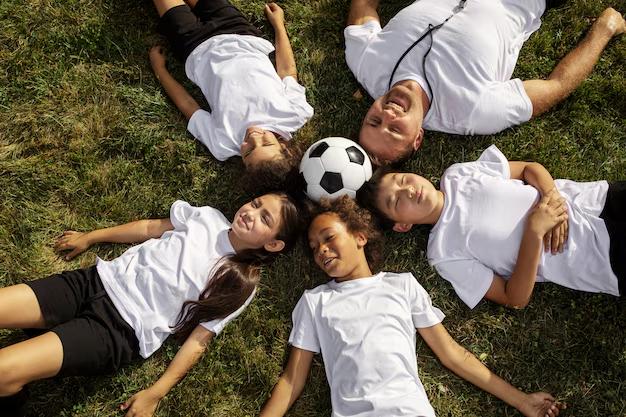
Team sports play a pivotal role in shaping children’s early development. From fostering social skills to promoting physical and emotional growth, engaging young children in activities like football and tennis offers benefits that extend far beyond the playing field. These organized sports experiences allow children to learn essential life skills in a structured, supportive environment, making team sports one of the most effective ways to guide young children through some of their most formative years. Here’s how team sports contribute to early childhood development and why they are so valuable.
Social Skills and Communication
One of the primary benefits of team sports is the opportunity they provide for children to develop social skills. From understanding how to communicate effectively with teammates to learning how to listen to instructions from coaches, sports environments encourage positive interactions. Young children in football clubs, for instance, begin to understand the importance of clear communication. Whether calling for a pass or coordinating a defensive play, kids quickly learn how essential it is to share information with others and work towards a common goal.
In addition to verbal communication, children also learn to interpret non-verbal cues, such as body language and gestures. These social interactions can be particularly helpful for young children who are still developing their language skills, as they learn to read facial expressions and understand social dynamics in a safe, team-focused environment.
Cooperation and Teamwork
Team sports teach children that success often depends on cooperation. In football training sessions, kids come to understand that each team member has a unique role, and working together is essential to achieving a goal. Whether it’s defending, passing, or scoring, children learn that every position has value, fostering a sense of belonging and purpose.
For young children, experiencing the joy of a shared victory or the camaraderie in a hard-fought loss highlights the value of teamwork. This helps them see how their actions impact others and encourages a cooperative mindset that will benefit them in group settings throughout their lives—whether in school projects, friendships, or future workplaces.
Building Self-Esteem and Confidence
Team sports provide young children with opportunities to build self-esteem and confidence through both personal and group achievements. Scoring a goal, completing a pass, or simply finishing a game all contribute to a child’s sense of accomplishment. In a children’s football club, for instance, small successes are celebrated by teammates and coaches alike, reinforcing a child’s belief in their abilities.
Participating in sports also allows children to see themselves as part of something bigger. Being part of a team, with shared goals and mutual support, can boost their confidence and self-image. Coaches play a critical role here, offering positive reinforcement and helping children believe in themselves. Over time, these experiences help children build a healthy self-esteem that can carry over into other areas of life, from academics to friendships.
Emotional Regulation and Resilience
Team sports create a structured environment for children to practice managing emotions—both positive and negative. Young athletes experience the thrill of winning, the disappointment of losing, and the frustration that comes with mistakes. In these moments, they are supported by teammates and coaches who help them process their emotions constructively.
Learning to manage these feelings and remain composed is a foundational aspect of emotional resilience. A child who learns to shake off a missed shot or recover from a mistake is better equipped to handle setbacks in other areas of life. By developing this resilience, children learn that challenges are part of growth and that perseverance is key. These lessons in emotional regulation are especially valuable during early childhood, a time when emotions are often intense and can be difficult for children to manage on their own.
Physical Development and Motor Skills
Team sports like football and tennis also promote physical development, which is crucial for young children. Football training, for example, involves running, kicking, and coordinating movements with others, all of which improve a child’s motor skills. Through repeated practice, children become more agile, coordinated, and physically aware.
Additionally, team sports encourage physical activity in a way that feels engaging and fun for young children. In a structured team environment, kids learn the importance of regular exercise, which sets the foundation for a healthy lifestyle as they grow older. By enjoying the physical aspect of sports at an early age, children are more likely to continue staying active throughout their lives.
Problem-Solving and Decision-Making
Team sports provide real-time situations where children must think quickly and make decisions. In a football match, for instance, a young player has to decide when to pass, when to shoot, and when to defend—all within seconds. These rapid decisions enhance a child’s critical thinking skills and teach them how to analyze situations under pressure.
Furthermore, sports teach children to adapt to changing circumstances. If their team is losing or the game plan isn’t working, they may need to adjust their strategy. This flexibility is a critical life skill, helping children learn that sometimes their initial plans don’t work out and that adapting to change is often necessary for success.
Learning Respect and Good Sportsmanship
Team sports also provide children with early lessons in respect and sportsmanship. Respect for coaches, teammates, and even opponents is fundamental to any sport. Young athletes learn to appreciate each other’s strengths and understand that everyone has something valuable to offer.
In football clubs, children are often taught to shake hands after a game, regardless of the result. These small acts of sportsmanship encourage children to see their opponents as peers rather than rivals. Learning to win and lose gracefully is an essential lesson, and understanding that both outcomes are part of the game helps children maintain perspective and humility.
Time Management and Responsibility
For many young children, joining a team sport is their first introduction to the concept of responsibility. Showing up to practice on time, remembering equipment, and committing to attend games are all part of being a team member. These responsibilities teach children about commitment and accountability—important skills they will carry with them into school and beyond.
Additionally, participating in team sports can introduce young children to the basics of time management. Knowing they have practice or a game scheduled helps them understand the importance of planning and organization, even at a young age.
Fostering a Sense of Belonging and Community
Team sports foster a sense of community that is especially valuable for young children. Being part of a football club or tennis team gives kids the chance to form friendships and feel connected to a group. This sense of belonging can have a positive impact on a child’s self-esteem, as they feel valued and supported by others.
For many children, their teammates become close friends, and their team often feels like a second family. This bond can be especially important in early childhood, as children begin to understand the importance of social connections. By participating in a team, children learn that they are not alone and that they are part of a supportive community.
The Long-Term Impact of Team Sports
The lessons children learn through team sports often last a lifetime. From teamwork to resilience, these skills become part of who they are, shaping how they interact with others and approach life’s challenges. Introducing young children to team sports provides them with a foundation of positive experiences and life skills that extend well beyond the game, helping them grow into well-rounded, confident, and socially aware individuals.